The Rise of Flexible Offices
The concept of flexible offices has gained substantial momentum in the last several years, as organizations evaluate new ways to optimize their workspaces. As businesses reassess how and where employees work, flexible offices have emerged as an attractive solution for their adaptability and scalability. Whether shared coworking hubs or suites tailored for specific companies, these spaces help organizations respond quickly to evolving needs. For those working in hybrid models or hosting frequent team meetings, finding conference rooms near me has become a critical, practical component of workspace planning.
Major coworking companies, as well as conventional landlords, are rapidly expanding their flexible office offerings to address new workplace expectations. A recent WeWork survey found that more than 70 percent of businesses expect to expand their office footprint next year. Nearly 60 percent of these businesses are weighing options that include flexible leases, work lounges, or coworking memberships. These statistics reflect a clear shift toward flexible, modular office solutions that can support both growing organizations and those looking to scale back their physical space.
The cost-effectiveness of flexible offices is another powerful draw. Organizations can better manage overhead and operational costs by leasing as much or as little space as needed, without the long-term commitment of traditional office leases. In times of uncertainty, this ability to pivot is invaluable, reducing financial risk while keeping teams connected in well-designed spaces. According to a feature in The New York Times, flexible workspaces are enticing a broad spectrum of businesses, from startups to multinational firms, all aiming to stay nimble in today’s fast-changing landscape.
Flexible office models can also help companies attract and retain talent by giving employees more choices about how and where they work, thereby further boosting job satisfaction and organizational culture.
Hybrid Work Models: A New Standard
As hybrid work arrangements become the status quo, companies are redefining what it means to “go to the office.” Hybrid models typically blend remote and in-office work, and data suggests this approach is rapidly becoming standard practice. According to a Scoop Technologies report shared by Bloomberg, the percentage of offices using a hybrid work model rose to 30 percent in the second quarter of 2023, up from 20 percent just a few months before. This signals a growing recognition that both employees and employers value flexibility, but with some structure.
 Unlike completely open-ended remote work, structured hybrid models usually mandate a set number of days employees must spend in the office. Surveys continue to find that the most popular arrangement is three days a week in the office, offering a balance between focused solo work at home and collaborative work in person. Structured hybrid policies help maintain a sense of team cohesion and company culture, while still honoring the autonomy modern employees have come to expect.
Companies are also using hybrid models to recruit from broader talent pools. By offering flexible work options, businesses can attract professionals who no longer need to live near a central office. This talent competition, now often spread far from the company’s headquarters, has made flexible offices an indispensable tool for both recruitment and retention.
Designing for Collaboration and Well-being
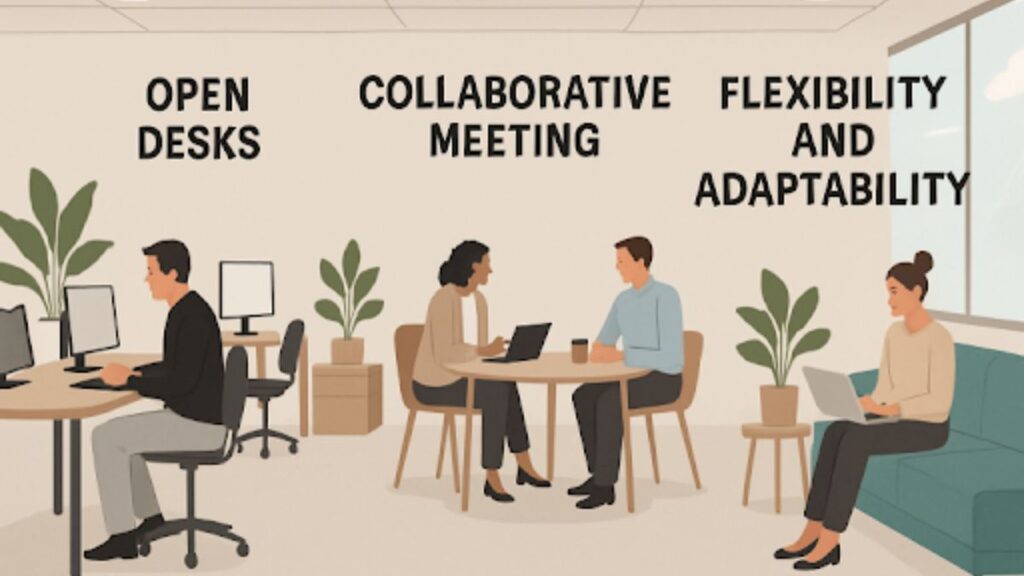
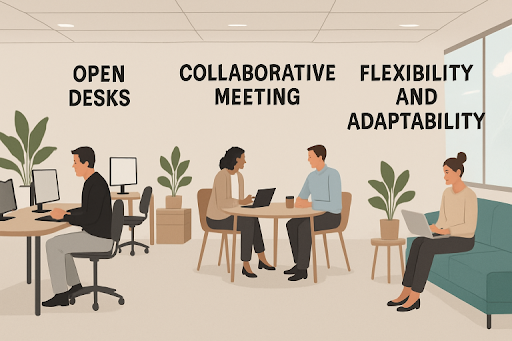
Flexible workspaces have helped redefine office design, moving away from fixed cubicles and assigned desks toward environments that foster collaboration and prioritize employee well-being. Leading architects and designers are now creating offices that support a wide range of work styles, social interactions, and health considerations. Recent examples include the work of Zeller & Moye, whose innovative office HQ design incorporates mobile furniture and lush indoor plantings to create adaptable space zones that blend work and social life seamlessly.
Elements of Effective Flexible Office Design
- Multi-use furniture: Easily reconfigured for meetings, group projects, or solo work
- Integrated biophilic elements: Plants and natural light to improve mood and reduce stress
- Wellness spaces: Areas for relaxation, mindfulness, and informal conversation
- Noise management: Soundproof pods or quiet zones to allow for focused work
Offices designed for flexibility allow companies to adapt their space to the task at hand. Teams can turn open areas into meeting zones as needed or reconfigure them to accommodate company events better. This adaptability supports productivity and collaboration, both vital to business success in a competitive marketplace.
Technological Integration in Flexible Workspaces
Technology is central to the functionality of flexible offices, powering everything from seamless communication to space management. As more companies adopt hybrid and remote work models, the demand for innovative digital solutions continues to increase. A GoTo study found that more than 60 percent of employees now prefer remote work settings that leverage advanced technology, such as AI-powered collaboration tools. These tools support project management, virtual meetings, and space booking, minimizing friction regardless of where employees are located.
AI and automation also boost efficiency by providing actionable insights into workspace usage and employee preferences. Smart office technologies, including environmental controls and occupancy sensors, optimize resource use and contribute to comfort and sustainability. Digital integration ensures that flexible workspaces remain scalable, responsive, and secure as companies change and grow.
Environmental Impact and Sustainability
Flexible workspaces are increasingly important in advancing environmental goals. By reducing the size of physical office footprints, organizations can significantly cut energy consumption and greenhouse gas emissions. Remote and hybrid models also reduce daily commuting, thereby lowering urban congestion and air pollution. As remote work grows, fewer people drive into cities each day, which has a measurable environmental impact, as noted by National Geographic research.
Many of today’s flexible offices are intentionally designed with sustainability in mind. This includes using recycled and locally sourced materials, installing energy-efficient lighting and HVAC systems, and providing robust recycling programs. Such efforts enable businesses to meet both their operational and corporate social responsibility targets in a single step. Sustainability is increasingly important to employees and investors alike, creating a strong incentive for companies to choose greener office solutions.
Future Trends in Flexible Workspaces
Looking ahead, the flexible office sector is positioned for significant growth and continuous innovation. Market research firm Technavio projects that flexible offices will see an additional $28 billion in growth from 2024 to 2028, highlighting ongoing demand for adaptable work environments. The market evolution is being propelled not only by hybrid work preferences but also by the rise of digital transformation, AI-driven analytics, and sustainability initiatives.
Companies that invest in flexible, tech-integrated, and eco-friendly spaces will be best prepared for the demands of tomorrow’s workforce. Flexible office providers will likely expand their services to include not just desks, but personalized amenities, advanced wellness offerings, and smarter technologies. These shifts ensure that the modern workplace supports both organizational goals and employees’ holistic needs.
In conclusion, flexible offices are transforming the way businesses operate by promoting adaptability, efficiency, and a people-centric vision of work. Their ongoing evolution will shape not just where we work, but how we work, ensuring organizations remain agile and future-ready.