
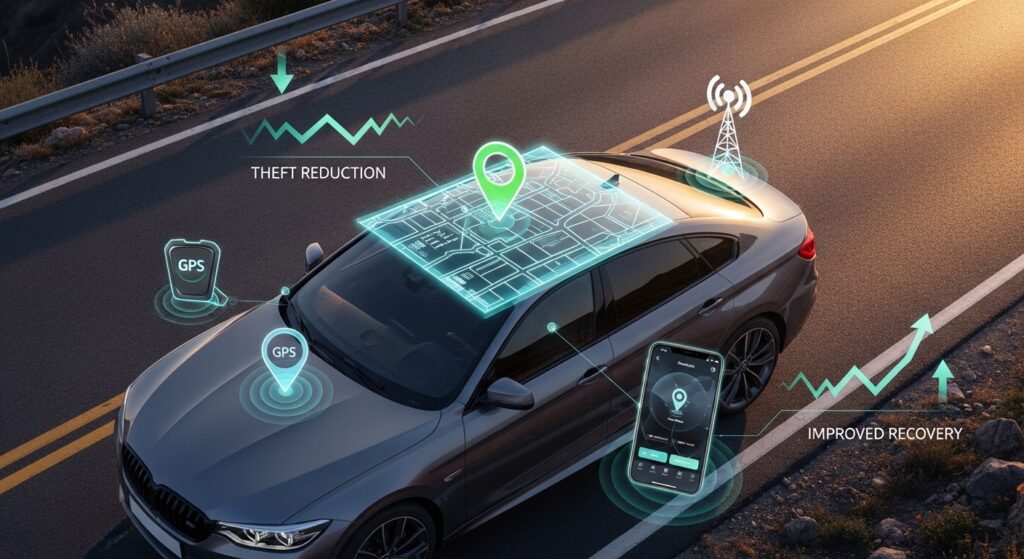
Vehicle theft remains a persistent and costly problem across the United Kingdom, affecting individual car owners, businesses, and fleet operators alike.
While traditional anti-theft tools such as alarms and steering locks still have a role, they are no longer sufficient on their own.
Modern car tracking systems have transformed how theft is prevented, detected, and resolved—shifting the focus from passive deterrence to active recovery and intelligence-driven prevention.
Today’s car tracking technology does far more than display a vehicle’s location. It enables rapid response, real-time monitoring, and coordinated recovery efforts that significantly improve the odds of retrieving stolen vehicles intact.
The Limitations of Traditional Anti-Theft Measures
Older anti-theft systems were designed primarily to discourage theft rather than respond to it. Common tools included:
- Audible alarms
- Steering wheel locks
- Immobilizers
- Basic factory security systems
While these measures can slow down opportunistic thieves, experienced theft rings often bypass them within minutes. Once a vehicle is taken, recovery historically depended on chance—traffic stops, abandoned vehicles, or delayed reporting.
Modern car tracking changes this equation by keeping the vehicle visible after theft, which is the most critical factor in successful recovery.
What Makes Modern Car Tracking Different
Unlike early GPS devices, modern car tracking systems are part of a connected ecosystem. They typically combine:
- Satellite positioning
- Cellular communication
- Vehicle sensors
- Cloud-based monitoring platforms
This integration allows vehicles to be tracked continuously and discreetly, even when they are moved long distances or stored temporarily.
Instead of asking “Was the car stolen?”, tracking systems answer:
- Where is the vehicle right now?
- How is it being moved?
- Has its behavior changed unexpectedly?
Real-Time Location Tracking and Rapid Response
The most direct benefit of car tracking is real-time visibility. When a theft occurs:
- The vehicle’s live location can be accessed immediately
- Movement can be monitored second-by-second
- Law enforcement can be provided with accurate coordinates
Time is critical in theft recovery. Vehicles tracked and reported quickly are far more likely to be recovered before they are dismantled, exported, or stripped for parts.
Modern systems eliminate the delay between theft and actionable intelligence.
Geofencing as a Theft Detection Tool
One of the most effective modern features is geofencing—the ability to define virtual boundaries around a vehicle.
If a car:
- Moves outside a predefined area
- Is driven during restricted hours
- Leaves a location without authorization
The system can instantly trigger alerts via mobile app, SMS, or email. This allows owners or fleet managers to identify thefts as they happen, rather than discovering them hours later.
Silent Tracking and Covert Installation
Unlike visible alarms or steering locks, many tracking devices are designed to be discreet or fully concealed. This creates two major advantages:
- Thieves are less likely to detect and disable the tracker
- Vehicles can continue transmitting location data without alerting the thief
Some advanced systems continue reporting even if:
- The battery is temporarily disconnected
- The vehicle is parked indoors
- GPS signals are briefly lost
This persistence dramatically increases recovery success.
Behavioral Analysis and Suspicious Activity Detection
Modern car tracking is no longer limited to “where” a vehicle is—it also monitors how it is being used.
Tracking platforms can identify:
- Unusual driving patterns
- Unexpected towing or transport
- Rapid relocation to known theft corridors
- Repeated short stops common in chop-shop activity
By recognizing abnormal behavior, systems can flag potential theft even before the owner realizes something is wrong.
Integration With Law Enforcement and Recovery Teams
Many professional tracking services work directly with recovery specialists and law enforcement agencies. When theft occurs:
- Verified tracking data is shared in real time
- Recovery teams can coordinate with police
- False reports are reduced through data confirmation
This collaboration improves efficiency and reduces the risk associated with vehicle pursuits or delayed responses.
In some cases, vehicles are recovered within hours of being reported stolen.
Fleet and Commercial Vehicle Protection
For businesses, vehicle theft represents more than the loss of an asset—it disrupts operations, contracts, and revenue.
Modern tracking helps fleets:
- Monitor all vehicles from a centralized dashboard
- Set theft alerts across large geographic areas
- Recover vehicles quickly without operational downtime
- Document theft incidents accurately for insurance claims
For high-value cargo or service vehicles, tracking often becomes a non-negotiable security requirement.
Insurance Benefits and Risk Reduction
Insurance providers increasingly recognize the value of modern tracking systems. In many cases, tracked vehicles:
- Qualify for reduced premiums
- Experience faster claims processing
- Have higher recovery rates, lowering total loss payouts
From an insurer’s perspective, a tracked vehicle represents a lower risk profile than one relying solely on traditional deterrents.
Privacy, Control, and Responsible Use
Modern car tracking systems are also designed with user control in mind. Owners typically decide:
- When tracking is active
- Who can access location data
- How long historical data is stored
For personal vehicles, this ensures security without unnecessary surveillance. For businesses, it supports compliance and transparency with drivers and employees.
Why Tracking Is Now a Core Anti-Theft Strategy
Vehicle theft has evolved, and so have the tools used to combat it. Organized theft networks move quickly, operate across regions, and rely on speed and anonymity. Modern car tracking directly counters these advantages by making vehicles:
- Traceable
- Recoverable
- Less profitable to steal
In effect, tracking shifts the balance of power away from thieves and toward owners, businesses, and recovery teams.
Conclusion
Modern car tracking has redefined vehicle theft prevention and recovery. By providing real-time visibility, intelligent alerts, behavioral monitoring, and coordinated response capabilities, it turns theft from a guessing game into a data-driven process.
In an environment where speed determines success, car tracking no longer functions as an optional add-on—it has become one of the most effective tools available for protecting vehicles and ensuring rapid recovery when theft occurs.