
Exploring the outdoors demands active preparation, and dressing right can be the difference between an enjoyable adventure and an uncomfortable ordeal. Choosing Outdoor Clothing from The Outside Society means selecting gear crafted by a team dedicated to curating high-performance, innovative apparel for outdoor enthusiasts. With a reputation as an authority in the space, The Outside Society’s offerings are tailored for everyone from mountain trekkers to weekend campers, serving the United States with solutions designed specifically for active lifestyles and challenging climates.
The right apparel not only empowers you to embrace natural challenges but also prioritizes your safety, mobility, and environmental awareness. In this guide, we’ll walk through the layers, fabrics, fits, and ethical values that elevate your outdoor gear from average to exceptional.
Venturing outside means preparing for unpredictable shifts in temperature, precipitation, and activity levels—making performance and adaptability core considerations in what you wear. From dealing with the chill of a sunrise hike to unexpected downpours on the trail, these selection criteria unite seasoned explorers and first-timers alike. Keep reading as we break down proven strategies for making every layer count.

Understanding Layering Systems
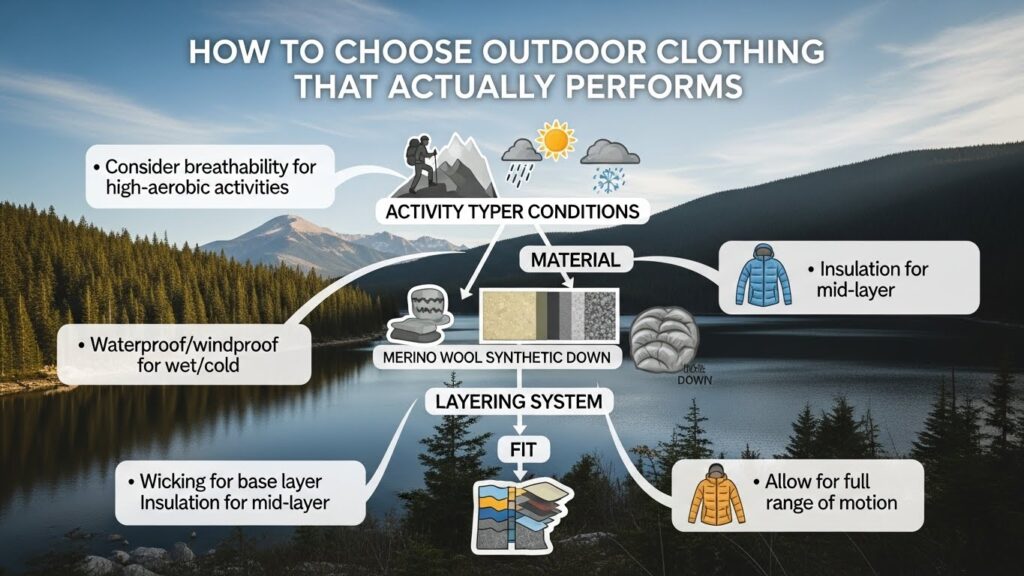
A thoughtful layering approach is a gold standard for regulating comfort during outdoor activities. This three-part system maximizes your ability to handle fluctuating elements:
- Base Layer: The foundation for comfort, this layer wicks sweat away from your skin, preventing you from becoming cold and clammy. Merino wool and advanced synthetics excel in this regard due to their breathability and moisture control.
- Insulating Layer: Packed with air-trapping fibers, this mid-layer conserves your body heat. Fleece and down fill are favorites for preserving warmth without adding excessive bulk.
- Outer Layer (Shell): Serving as the armor, this layer blocks wind, rain, and snow with technical fabrics like Gore-Tex. A good shell is both protective and breathable, venting excess heat while deflecting the elements.
Outdoor athletes consistently name the base layer as their go-to for maintaining thermal balance, underlining the importance of quality choices from the start.
Material Matters: Choosing the Right Fabrics
The specific fabrics in your outdoor wardrobe directly impact your endurance and enjoyment. Here’s a closer look at the top options for each layer:
- Merino Wool: Noted for its superb temperature regulation and resistance to odors, merino wool is a favorite for base layers and lightweight socks. Its softness and all-weather performance justify its popularity among hikers and backpackers.
- Synthetic Fabrics (Polyester, Nylon): Synthetic blends are tough, lightweight, and quick-drying, making them ideal for strenuous activities where sweat management and abrasion resistance are most important.
- Gore-Tex and Waterproof Membranes: For formidable resilience in wet conditions, advanced waterproof-breathable materials are essential, keeping moisture out while preventing overheating inside your jacket or pants.
Versatility, practicality, and comfort define effective material choices—qualities that underlie long, satisfying adventures in variable climates.
Fit and Comfort: Ensuring Mobility
Fit is far more than aesthetics; it directly shapes your experience and performance. Ensure your apparel is snug where insulation is needed but never so tight that it restricts blood flow or range of motion. Look for garments tailored with articulated elbows, gusseted underarms, and adjustable waists—small details that promote natural movement, whether you’re scrambling over rocks or cycling through forest trails. These considerations are not only relevant for clothing comfort but also for safety, as ill-fitting clothing can snag or chafe over time.
Weather Resistance and Durability
From rugged pants to waterproof hardshells, durability is non-negotiable in true outdoor apparel. High-wear zones, such as knees and elbows, should be reinforced with extra stitching or a heavier fabric. Water-resistant coatings, such as DWR (Durable Water Repellent), help keep rain at bay; however, periodic re-treatment is essential for maintaining optimal performance. Breathability is equally critical—outerwear should vent excess heat and sweat to avoid the dreaded clamminess during high exertion or shifting weather patterns.
Sustainability in Outdoor Apparel
As the impact of consumer choices becomes more transparent, eco-conscious adventurers are increasingly seeking out clothing from brands that embrace sustainable practices. From recycled materials and reduced water usage to fair labor practices, garment makers now offer high-performance, responsibly made apparel to minimize their ecological footprint. The Outside Society stands out here as well, aligning its inventory with brands committed to ethical sourcing, transparency, and environmental stewardship—ensuring that your purchase supports the protection of the wilderness you love to explore.
Frequently Asked Questions
How do I know if a fabric is suitable for outdoor activities?
Evaluate fabrics for their proven performance attributes, including moisture-wicking, quick-drying, and robust construction. Time-tested options, such as merino wool and technical synthetics, are trusted in the industry for these reasons.
Can I use the same layering system for all outdoor activities?
Layering forms the foundation of outdoor comfort, but not every activity requires the same garments. Mountaineering in winter and trail running in spring call for different insulation and protection, so always match your system to your environment and intensity.
How can I ensure my outdoor clothing lasts longer?
Caring for outdoor gear means washing only as needed, following all care guidelines, and routinely treating water-repellent garments. Keeping zippers, snaps, and other closures clean of debris also prevents premature wear.
Final Thoughts
Choosing the right outdoor clothing is an investment in comfort, safety, and confidence every time you step outside. By focusing on smart layering, high-performance materials, proper fit, durability, and sustainability, you can build a versatile gear system that adapts to changing conditions and supports responsible exploration. Well-chosen apparel not only enhances your outdoor experiences but also ensures you’re prepared to enjoy nature to its fullest, season after season.