
Maintaining a smooth-running plumbing system requires homeowners to adapt their care and attention as the seasons change. From bitter winter freezes to the bustling water use of summertime, being proactive can help avoid the stress and expense of broken pipes or leaks. By learning the specific steps to manage plumbing year-round, you can protect your home, enjoy peace of mind, and save on costly repairs. For those located in Colorado, Affordable Plumbing in Westminster provides reliable local support when you need a hand with plumbing maintenance or repairs.
Seasonal changes can introduce unexpected issues, such as frozen outdoor faucets or blocked gutters after heavy rains. Adopting a preventive mindset—not just reacting to emergencies—can dramatically extend the life of your home’s plumbing. Professional advice and annual inspections can also go a long way in ensuring the longevity and resilience of your system.
Simple routines, like clearing out gutters in the spring or insulating pipes before winter, help minimize the threat of water damage and ensure every part of your plumbing is working as it should. Kids home for the summer? That means extra showers, laundry, and sprinklers, all of which call for a bit more vigilance to avoid sudden plumbing mishaps.
Addressing these seasonal plumbing needs isn’t just about immediate comfort; it’s an investment in your property and your family’s well-being year-round. With awareness and regular effort, homeowners can stay ahead of plumbing problems—saving time, money, and inconvenience.
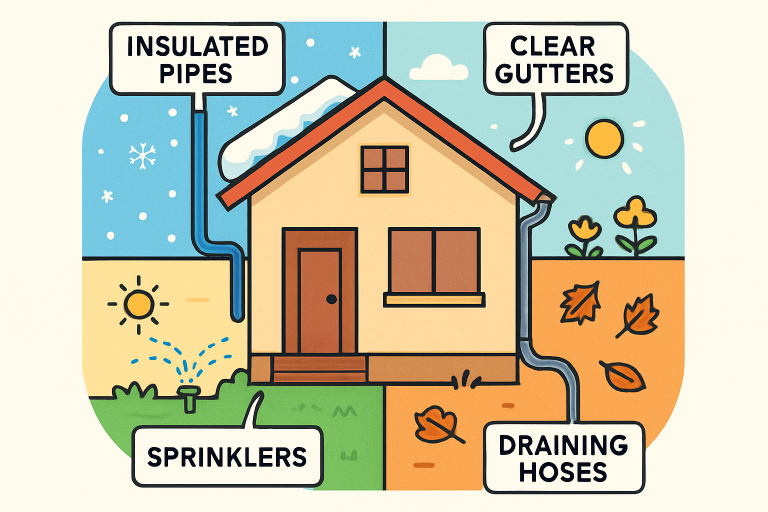 Winter: Guarding Against Frozen Pipes
Harsh winter temperatures pose one of the most significant risks to residential plumbing: frozen pipes. Water expands when it freezes, and a frozen pipe can easily burst, causing expensive water damage and disruption. To prevent this, it’s essential to take proactive steps such as insulating exposed pipes, letting faucets drip during extreme cold, and sealing any drafts near plumbing. For detailed guidance on protecting your home’s pipes during winter, Consumer Reports offers a comprehensive guide. Preventive strategies make all the difference as temperatures plummet:
-
Wrap exposed pipes in insulation, especially in attics, basements, or crawl spaces.
-
Open cabinets under sinks during deep freezes to allow warm air to circulate pipes.
-
Let indoor faucets trickle overnight during the coldest spells to keep water flowing.
-
Seal any gaps in walls and around windows to prevent drafts near plumbing fixtures.
Never pour boiling water down the drain in winter; this can worsen clogs and potentially damage older pipes. Instead, use dish soap and hot tap water to clean drains, a gentler, safer alternative.
Spring: Inspecting for Winter Damage
As frost thaws and temperatures rise, spring is the ideal season for inspecting your home’s plumbing after the challenges of winter. Start with these key steps:
-
Check for leaks or cracks in pipes caused by freezing and thawing cycles.
-
Clear debris from gutters, downspouts, and storm drains to support proper drainage.
-
Test all outdoor spigots and hoses for leaks, as ice damage can cause them.
-
Inspect your sump pump to ensure it’s ready for spring rainfall.
Spring maintenance also means looking for signs of hidden water damage in areas such as the basement, crawl spaces, and behind appliances. Addressing these minor issues early can prevent major repairs down the road.
Summer: Managing Increased Water Usage
Summer activities—gardening, lawn care, showers after outdoor play, and extra laundry—put additional pressure on your plumbing. This is especially true if your family grows temporarily with visiting friends or relatives during the vacation season. Stay ahead by:
-
Inspecting outdoor faucets and hoses for wear and leaks at the start of summer.
-
Check your irrigation system and sprinklers to prevent overwatering and wasted water.
-
Watch for signs of high water pressure, which can indicate hidden leaks or stress on pipes.
-
Being extra mindful about blockages, avoiding putting starchy foods, oils, and fibrous material down any drains.
Excessive water use can magnify underlying issues, so pay attention to changes in water pressure or unexpected puddles near your foundation.
Fall: Preparing for Cold Weather
As soon as the weather starts to cool, winter preparation should be top of mind. Taking time for these tasks can protect your system from freezing and related damage:
-
Drain and disconnect outdoor hoses, then store them inside to prevent cracks.
-
Shut off and drain outdoor faucets with interior shut-off valves if available.
-
Re-insulate vulnerable pipes and repair any worn insulation.
-
Schedule a professional plumbing inspection before the first frost to identify minor problems before winter sets in.
Being proactive in the fall prevents pipes from freezing and is far less stressful—and expensive—than dealing with burst pipes and emergency repairs.
General Maintenance Tips
For guidance on keeping your plumbing efficient and conserving water, the EPA WaterSense home maintenance tips are an excellent resource. Seasonal attention is crucial, but regular year-round habits also support the health of your plumbing system:
-
Perform a whole-house leak check monthly, especially around toilets, faucets, and under sinks.
-
Steer clear of harsh chemical drain cleaners, which can corrode pipes and damage your plumbing.
-
Never flush wipes, cotton pads, or hygiene products, even if the label says they’re flushable.
-
Be careful with what you pour down the drain—coffee grounds, grease, and particular food waste can lead to stubborn clogs.
Keeping these simple practices in mind can prevent a gradual buildup and avoid unnecessary repairs in the long run.
When to Call a Professional
Even with thorough DIY maintenance, some problems require specialized expertise. Call a licensed plumber if you encounter:
-
Consistently slow drains or persistent clogs you can’t clear with a plunger or snake.
-
Burst pipes, extensive leaks, or any sign of water pooling where it shouldn’t be.
-
Unexplained sounds like hissing, banging, or gurgling from your plumbing.
-
Sudden drops in water pressure without any apparent cause.